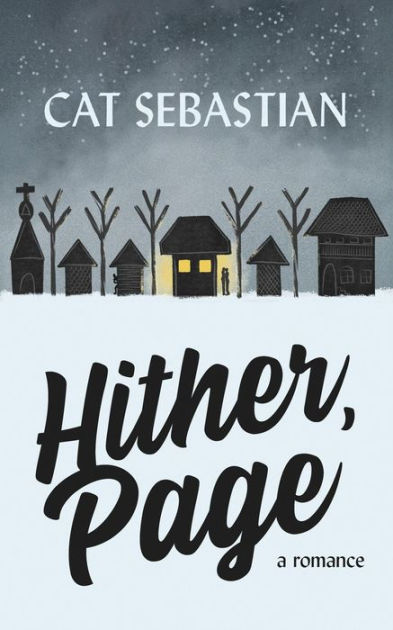
A jaded spy and a shell-shocked country doctor team up to solve a murder in postwar England.James Sommers returned from the war with his nerves in tatters. All he wants is to retreat to the quiet village of his childhood and enjoy the boring, predictable life of a country doctor. The last thing in the world he needs is a handsome stranger who seems to be mixed up with the first violent death the village has seen in years. It certainly doesn’t help that this stranger is the first person James has wanted to touch since before the war.The war may be over for the rest of the world, but Leo Page is still busy doing the dirty work for one of the more disreputable branches of the intelligence service. When his boss orders him to cover up a murder, Leo isn’t expecting to be sent to a sleepy village. After a week of helping old ladies wind balls of yarn and flirting with a handsome doctor, Leo is in danger of forgetting what he really is and why he’s there. He’s in danger of feeling things he has no business feeling. A person who burns his identity after every job can’t set down roots.As he starts to untangle the mess of secrets and lies that lurk behind the lace curtains of even the most peaceful-seeming of villages, Leo realizes that the truths he’s about to uncover will affect his future and those of the man he’s growing to care about.
I missed the part where this is a Christmas romance until I was into the story enough to care about the characters. I rather like that version of subtle. It didn’t feel like a Hallmark Special. It did give Call the Midwife vibes, but I would say that is purely due to setting.
Genuinely, I don’t think I’ve ran into a post-war story in a very long time. It’s usually during WW2 or sometime before it or after the 1950s. So, this was a wonderful story to run into. It was refreshing to be reminded of what many of our grandparents or great-grandparents went through not only during the war but also after. It felt like they hadn’t been forgotten.
I’m not sure about the sketch of the murders. It felt really wobbly. But the world build and the character development made it worth while. I appreciated how there was some time spent on the whimsy of floral word play. The stories I’ve been reading recently got to the meat of the dish quickly, but this one set up a rather elaborate arrangement that I just haven’t seen in a while. Especially for something that could probably have come across as a short story otherwise.
The on page spice was as short as the story could have been and didn’t quite develop in a way I would call titillating or steamy, but it existed. For people who like a touch of on-page spice, but aren’t keen on fourteen pages of skin slapping against skin, this will probably be enjoyable. In a way, it felt appropriate to the type of story construction happening, and the secretiveness that time-frame would have warranted for a gay couple. That is another way that the world build was done well.
It did make me wonder about the rationing system post-war in Britain. I thought tea was still heavily rationed by the end of the war and into the next decade following it. So, the amount mentioned with frequency in the story was a bit jarring. I was aware of the firewood ration and the pig shares. It was the tea. So much mention of tea.
I say that having made myself a solid 30 oz pot of tea to work on for the day… I can’t judge.
The editing was clean. I didn’t even feel like it needed an extra chapter or two to flesh out any plotholes or character development. I wasn’t distracted with grammar issues either, so I’d call it a well balanced read.
This story isn’t exactly one I’m motivated to read the second story about. I liked it as a one off and how it ended. I fear the second one will end up being the innaine Hallmark channel misunderstanding that just needed the characters to be sympathetic and talk it out. Now, I could be wrong. It’s just not something I feel like braving right now.
Would I suggest it?
Yeah, I think so. If for nothing else but the world build in a post-war Britain. It’s not something I’ve encountered often and I appreciated it’s representation. It felt cozy. And the spy didn’t feel like some omnipotent James Bond, but a guy who was decent enough. The representation of PTSD for the the doctor was pretty spot on for flashbacks and the exhaustion that comes with them. It wasn’t overblown. And it did get into the depths of feeling like there’s something wrong with you for not being able to control it when you know perfectly well that you can’t. Gently sweet mixed with a couple of murders. Not sure how to explain that other than it sounds very British.